First help skills are just valuable when exercised till they end up being automatic. In Jandakot, where flight terminal website traffic, light commercial parks, and suburban communities rest cheek by dewlap, the demand for qualified, exercised responders is real. This write-up describes what effective first aid training looks like below, with a concentrate on hands-on method and rigorous evaluation. It is composed for work environment safety and security officers, local business owners, neighborhood team leaders, and anybody considering a first aid course in Jandakot who wants to understand exactly how to pick a program that provides sensible competence instead of a certificate that collects dust.
Why technique matters
Being taught the actions for CPR or haemorrhage control is different from having the ability to execute them under pressure. I have seen trainees that recognized the book series but iced up when a fellow pupil substitute collapse and vomit. Technique hardens the motor skills of breast compressions, the judgment calls concerning when to reposition an airway, and the confidence to lead by voice when others panic. In Jandakot offices-- loading bays, building backyards, airport service facilities-- cases usually take place where there is no professional clinical -responder for 10 to 20 mins. The very first five minutes shape results. Hands-on training shortens that time to reliable intervention.
What a strong Jandakot first aid course looks like
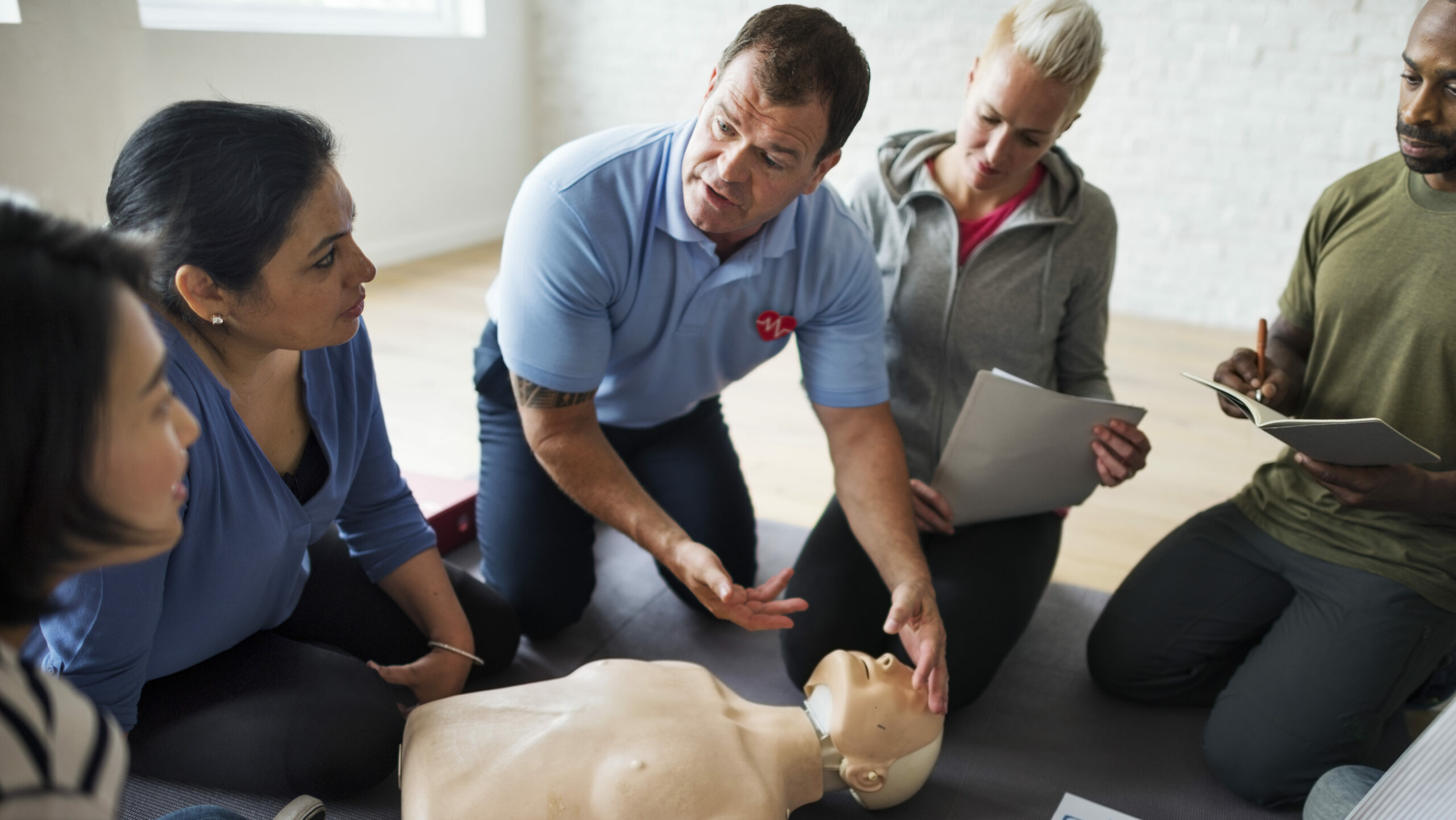
A robust first aid course in Jandakot prioritises energetic finding out over passive lecture. You should expect a blend of brief, concentrated input from an instructor followed right away by useful stations where students turn through practical scenarios. Right here are core functions to look for.
- Low student-to-instructor ratio. Courses of 8 to 12 per trainer allow significant guidance of each person's compressions, bandaging, and respiratory tract management. Repetition with responses. Trainees carry out CPR cycles, using manikins that provide instant responses on depth and rate, then repeat with instructor correction. Scenario complexity that enhances. Begin with single-issue simulations like fainting, after that move to combined occurrences such as a chemical splatter adhered to by respiratory tract compromise. Use of genuine tools. Training needs to include a computerized external defibrillator, tourniquets, oxygen treatment where ideal, and actual first aid kits set up like those students will certainly make use of on the job. Formal evaluation that mirrors real jobs. Analysis needs to be sensible and criterion-based, not a multiple-choice test alone.
If you search for first aid training Jandakot or first aid course Jandakot, ask carriers whether they run sessions that match those standards. Courses that call themselves first aid and CPR Jandakot or first aid and cpr course Jandakot ought to consist of both cognitive knowing and hands-on assessments.
Typical course layouts and timeframes
Course size differs by credentials. A common workplace system such as Offer First Aid (HLTAID011 or its present matching) generally runs over one full day, around 8 hours face-to-face. A consolidated Supply First Aid and CPR course could be a complete day plus a shorter follow-up for the CPR skills inspect. A CPR course Jandakot or cpr course Jandakot can be a stand-alone three-hour session when the cpr refresher course jandakot task only needs fundamental resuscitation skills.
Refresher courses often tend to be shorter but denser, commonly four hours for a cpr correspondence course Jandakot where the focus gets on revalidating compressions and AED use. Remember official qualifications generally require renewal every 12 to 36 months depending on the regulatory authority and the certain qualification. Companies generally anticipate a first aid certificate Jandakot that is valid and current.
Practical terminals you need to experience
Good training splits the practical day right into distinctive stations so students obtain several repetitions of specific abilities. A reasonable set of stations includes respiratory tract and breathing analysis and management, CPR and AED method, shock and circulation monitoring, limb injuries and splinting, and bleeding control consisting of pressure dressings and tourniquet usage. Scenario-based stations ought to place those abilities together.
One component usually underused is ecological realism. For instance, practice CPR on the flooring rather than a training table, present noise https://dmcseoknns.gumroad.com/ and spectator disturbance to simulate a disorderly workplace, and utilize moulage to develop sensible wounds. In one training session at a light industrial website near Jandakot Flight terminal I attended, students had to carry an unconscious individual from behind a pallet stack and do CPR close to a grumbling forklift. It was unpleasant, yet it showed practical troubles-- uncomfortable positioning, keeping compression high quality while staying clear of debris, and connecting with associates to clear space.

Assessment that verifies competence
Assessment should be competency-based and evident. A reliable evaluation design breaks down required tasks right into discrete abilities with evident results. For Give First Aid, assessors commonly try to find the capability to carry out CPR properly for 2 mins, demonstrate reliable AED pad positioning and shock distribution, control major external bleeding with right application of pressure and dressings, and handle a respiratory tract consisting of recuperation position strategies where appropriate.
Assessments need to consist of a minimum of two reasonable scenarios that require incorporated decision making. One situation may be a single adult collapse calling for resuscitation and AED usage. A second circumstance may involve a mindful person with a deep, bleeding limb injury and indications of shock. Both scenarios allow assessors to assess core skills and communication.
A practical evaluation list ought to cover both psychomotor skills and non-technical skills: leadership, scene security appraisal, calling for assistance, and clear handover to showing up emergency services. Where possible, the assessor needs to utilize failure-to-pass criteria that are specific. As an example, a trainee that consistently executes compressions less than 4 centimetres deep (or outside the present guideline variety) need to be given structured feedback and the possibility to remediate before failing the unit.
What technology assists and what it can not replace
Feedback manikins have actually changed CPR training. Modern manikins measure compression deepness, rate, and recoil, and offer instantaneous visual or acoustic cues. They are important for finding out appropriate strategy. Simulated AED fitness instructors imitate pad placement and shock distribution without delivering a real shock, which allows duplicated practice. Video clip playback of a trainee's efficiency is an additional helpful device; seeing yourself carry out compressions frequently speeds up correction.
Technology is an amplifier, not a substitute. It can not imitate the appearance of a torn tendon, the changability of a throwing up individual, or the smell and stress that come with a genuine incident. Those elements are the factor real-time role-play and improvisation continue to be core to quality training.
Choosing a provider in Jandakot
Selecting a first aid pro Jandakot boils down to 3 elements: educational program alignment with national criteria, teacher experience, and how the service provider runs functional sessions.
First, check that the course maps to the existing across the country identified proficiencies if you require a formal certificate. Numerous listings make use of terms like first aid course in Jandakot or first aid courses in Jandakot; verify which systems of proficiency are being taught.
Second, meet the teachers. Inquire about their sensible background. A teacher that has actually changed between servicing emergency situation ambulances, training in commercial very first action, and providing neighborhood CPR sessions will certainly have a richer toolkit than someone that just has class training experience. Trainers who consist of individual field narratives assist make circumstances realistic without jeopardising privacy.
Third, examine how technique is structured. Can you walk through the class timetable? Are there terminal turnings, how much time is each technique block, and what devices is utilized? If the instructor can not plainly explain their analysis procedure and re-sit policy, be cautious.
Preparing your team before the course
A little pre-course preparation improves outcomes drastically. Ask participants to read any kind of pre-course materials, view a short CPR strategy video, and include comfortable garments that enables flooring method. Organisers needs to make certain individuals finish any type of needed medical statements and divulge problems that could affect their capacity to participate physically. For workplaces, notify staff regarding the requirement to exercise substitute hefty lifting securely; if somebody has a back concern, intend an adapted function that still techniques decision-making and delegation.
When a company sends out a group for first aid courses Jandakot, take into consideration surprising individuals so not all skilled individuals are absent at the exact same time, and keep records of who finished which units and when renewal schedules. A simple spread sheet with names, course kind, date, and certificate expiry ends up being invaluable throughout inspections.
Common weaknesses to see for
Some courses count as well heavily on concept and provide little useful time. Other frequent troubles include overcrowded courses where teachers can not offer purposeful rehabilitative feedback, and the use of out-of-date guidelines or devices. I when examined an office first aid program where trainees spent 6 hours listening to slides and only 15 minutes on CPR technique. That is not acceptable for a workplace that might expect those personnel to reply to a collapse.
Another concern is shallow analysis. If certifications are released after a multiple-choice test with no useful evaluation, the certificate means extremely little. Similarly, courses that do not examine the top quality of compressions with feedback manikins are missing out on an important step.
Recovery and psychological preparedness
First aid training that quits at abilities threats leaving responders unprepared for the psychological after-effects. Individuals who carry out CPR in an office setting often experience distress later on. Great courses consist of a brief module on emotional first aid for responders, what to anticipate psychologically, and just how to gain access to assistance or debrief with coworkers. Simple techniques such as a brief group debrief, get in touch with information for worker aid programs, and normalising psychological reactions dramatically minimize longer-term stress.
Specialised training: beyond the basics
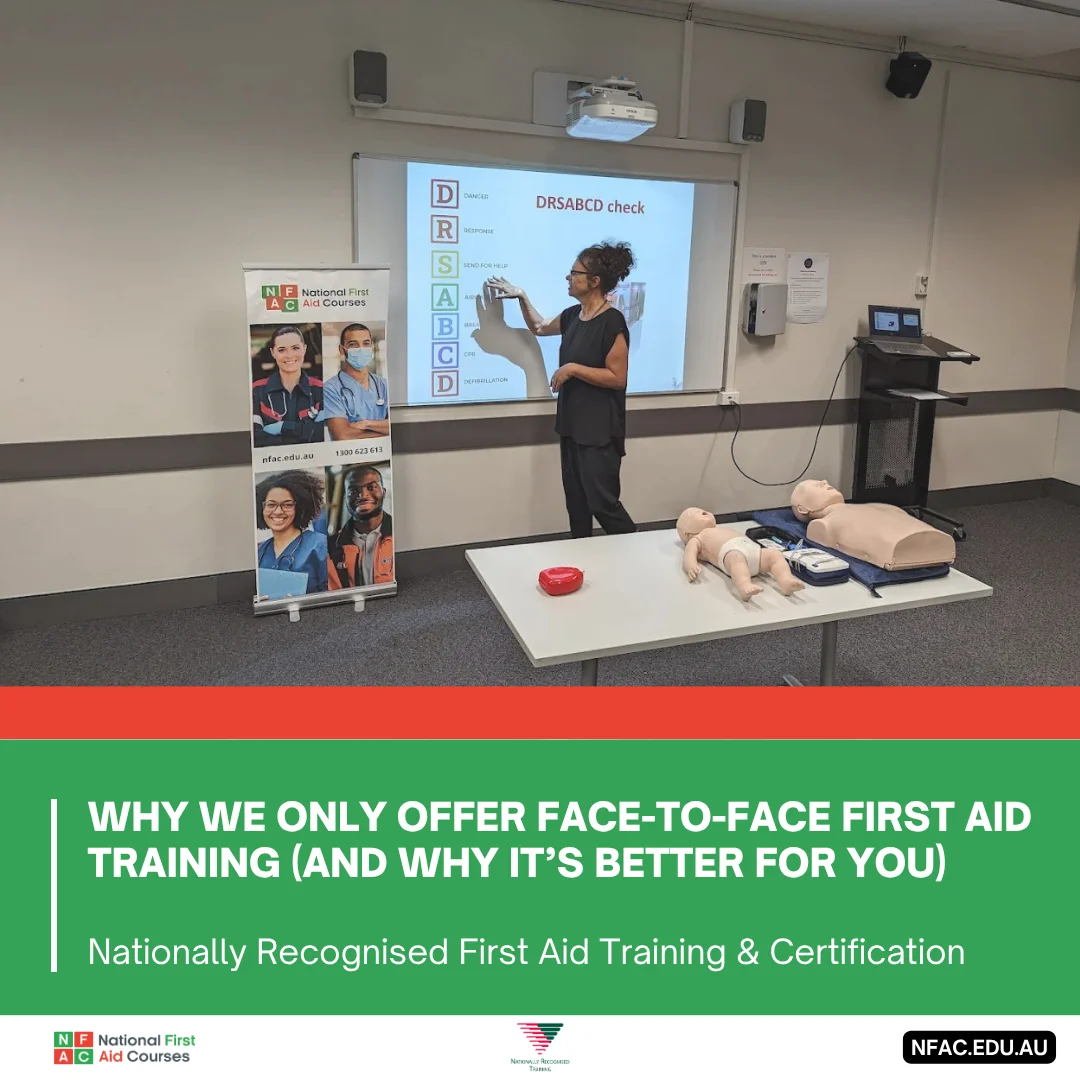
Some work environments need components beyond the general offer first aid device. Remote sites and industries in Jandakot with details hazards might benefit from advanced injury life support principles, oxygen management recommendations, or training in responding to chemical direct exposures. Where a first aid course Jandakot promotes industry-specific modules, ask for information about functional drills and devices. For instance, a workshop taking care of solvents must consist of substitute chemical splashes with appropriate purification procedures.
Refresher method and retention
Skills decay is genuine. Hands-on abilities like CPR compressions deteriorate over months if not exercised. A useful retention strategy mixes formal correspondence course with short work environment drills. For instance, run a 15-minute group drill monthly where a various person works as the responder and others play spectators. Every three to six months, carry out a 30 to 60-minute abilities session utilizing manikins to practise compressions and AED pad positioning. Then set up an official correspondence course every 12 to 24 months, depending on the credentials and work environment risk profile.
I recommend companies determine capability as opposed to participation. Instead of merely videotaping that personnel participated in a refresher course, perform a brief observed abilities check and record the end results. This strategy keeps ability levels honest and identifies people that require extra support.
Costs and value
Prices for first aid and CPR Jandakot differ based upon class size, equipment, and whether the supplier provides on-site. Expect a single-day HLTAID011-style class to variety extensively; smaller courses with high-grade equipment and reduced ratios justify greater costs since they generate far better end results. Consider training as a financial investment in threat decrease. The expense of a well-run sensible program is small compared to the prospective costs of office injury, regulative charges, or the human price of inadequate response.
Anecdote that clarifies the difference technique makes
During a multi-site training program I supplied for an air travel maintenance professional, one trainee later made use of abilities from that day to conserve an associate who had a cardiac arrest in the workshop. Because the trainee had actually practiced two-minute CPR cycles with real-time responses, he kept top notch compressions till the paramedics arrived. That instance emphasized a clear reality: ability quality, not simply having a certificate, forms results. The trainee told me afterwards that the duplicated practice and the anxiety of substitute noisy atmospheres made the real event "less terrifying and extra step-by-step," which is a precise summary of preparedness.
Questions to ask before you authorize up
When reviewing service providers in Jandakot, ask these sensible concerns: The amount of students per instructor? What manikins and AED fitness instructors do you use? Are circumstances reasonable and do they consist of moulage? Is evaluation sensible and observed? What is your re-sit and remediation policy? Can you run on-site sessions using our actual first aid packages and office design? Response to these concerns expose whether a supplier concentrates on proficiency or compliance.
Final useful checklist
- confirm the course maps to the recognised systems you require, such as offer first aid verify low student-instructor proportions and the use of comments manikins ask for information on useful situations, evaluation techniques, and re-sit policies plan office refresher courses and brief monthly drills to preserve skills ensure emotional debrief and assistance treatments are covered
Where to look locally
Search terms like first aid course Jandakot, jandakot first aid course, and cpr training Jandakot will appear local companies. See their facilities, evaluate their equipment, and ask to attend a section of a class preferably. Neighborhood centres, signed up training organisations, and purpose-built first aid training centres all operate around Jandakot. Contrast not just cost yet the deepness of practice and assessment.
If you handle a workplace, align your training schedule with functional requirements and maintain certifications and analysis records centralised. If you schedule as an individual, choose a session that prioritises practical repetition and gives you access to comments devices.
Practical following actions for organisers
Book a site go to by the instructor so they can tailor situations to your work environment hazards. Give a checklist of typical incidents you predict on-site. Make sure participants wear clothes appropriate for floor work which any kind of physical constraints are disclosed in advance of class. Schedule a brief debrief after real-time incidents so trained personnel can review challenges and identify training gaps.
Getting it right
The distinction in between first aid training that produces efficiency and training that just concerns documents comes down to one factor: purposeful exercise with purposeful feedback. In Jandakot, where time to specialist aid can be measured in minutes that matter, the area gain from training developed around reasonable method, solid assessment, and ongoing maintenance. Choose a carrier that comprehends that, demand hands-on hours, and develop a work environment routine that maintains skills sharp. The following time a collapse happens, those minutes will count.